1357 total results for “”
Director's Message to UMIACS December '24

My first job at the University of Maryland—it’s been more than 20 years now—was as an assistant research scientist in UMIACS. Like many when they first arrived here, I was quite impressed with the scope and efficiency of the institute’s operations.
UMIACS was expanding at that time—there was an ongoing surge of new federal funding for computational linguistics and computer vision applications for national security, with additional research dollars for computational biology and cybersecurity soon to follow.
What I discovered was that in addition to forward-looking leadership from the UMIACS director at that time (V.S. Subrahmanian, now at Northwestern University), there was another powerful force driving much of the day-to-day activities of UMIACS.
That force was Johanna Weinstein, who died earlier this month after having served for more than three decades as director of administration and operations for the institute, retiring from that role in late 2016.
“Jo” as she was known to us, had the uncanny ability to “make things happen.” Need new faculty lines and support staff to launch a major interdisciplinary center? Talk to Jo. Want to elevate the pre-and post-award management of research funding to a premiere level that is, in my opinion, second-to-none at our university? Jo would find and mentor staff to make that happen. Having an issue with office space for 12 new hires? Jo will figure it out.
We owe a lot to Jo’s expertise and commitment to advancing our institute. She could quickly cut through all the “academic speak” and provide workable solutions to most any operational challenge that UMIACS faced.
And many of us, including myself, looked to her for personal advice when needed.
She will be missed, but not forgotten, as we continue to move forward. Thank you, Jo, for all that you did on our behalf!
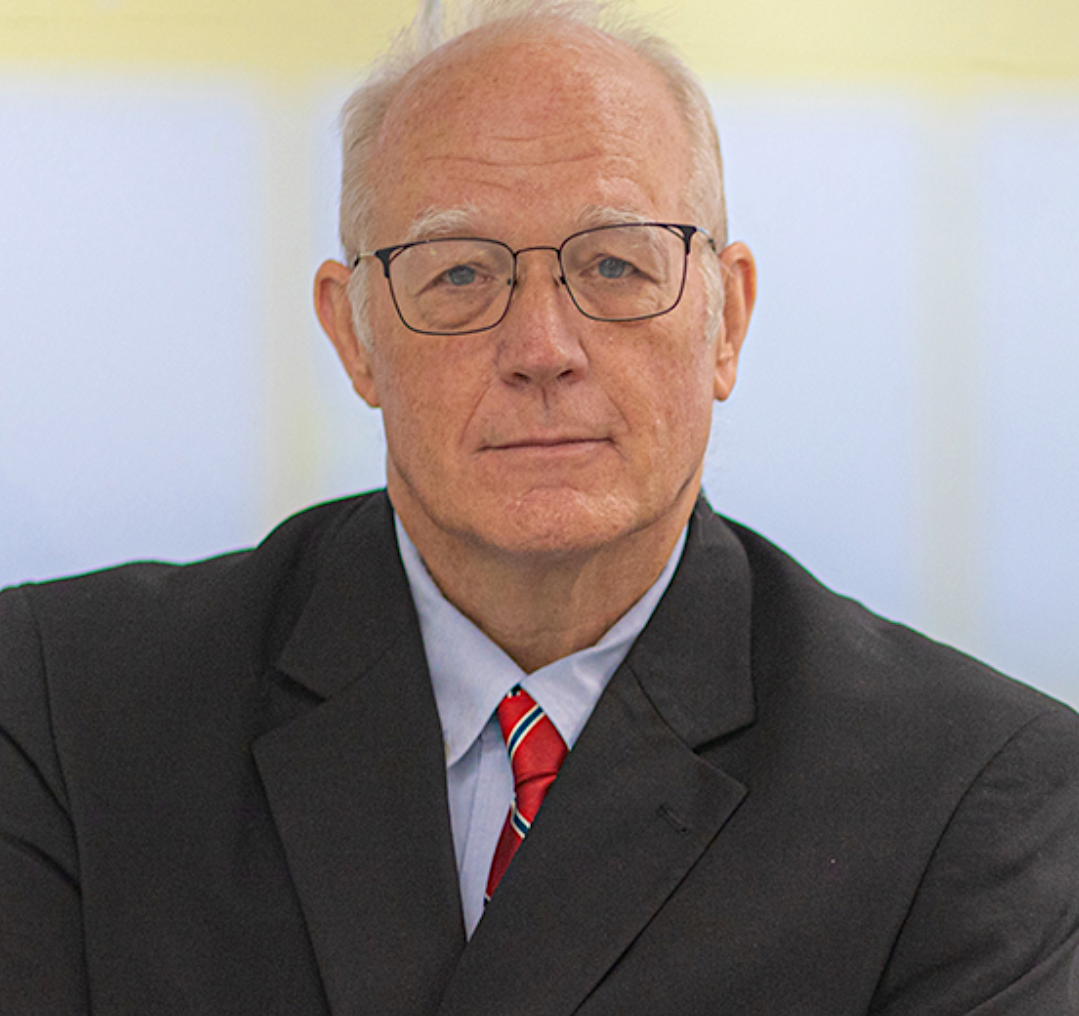
—Mihai Pop, UMIACS Director
Director's Message to UMIACS February '25

The first newsletter of 2025 is certainly looking toward the future, with a half-dozen stories highlighting research and scholarship by faculty, postdocs and students involved in quantum computing and quantum information science.
If you haven’t noticed, “quantum” is getting a lot of attention lately. Maryland Gov. Wes Moore visited our campus earlier this year to announce a bold initiative to turn the region into the “Capital of Quantum.” This includes an initial investment of $27.5 million in the governor’s FY 2026 proposed budget.
UMIACS has long held an important role in the university’s quantum enterprise. Two of the leading quantum efforts on our campus—the Joint Center for Quantum Information and Computer Science (QuICS) and the NSF Quantum Leap Challenge Institute for Robust Quantum Simulation (RQS)—fall under the umbrella of our institute, with UMIACS staff providing administrative and technical support as needed.
UMIACS also supports more than a dozen federal scientists (mostly from the National Institute for Standards and Technology) that are embedded full-time on the UMD campus, with the majority working in QuICS and RQS. We believe that this rich federal/academic partnership is essential for making significant progress as we work toward building quantum computing systems that can revolutionize advances in drug and chemical research, financial modeling, communication networks, and more.
Looking ahead, we hope to continue to expand our efforts in quantum—working closely with our federal partners, other researchers on our campus, and educators across the state interested in bringing quantum learning activities to their classrooms.
Collectively, we will make the state of Maryland the Capital of Quantum, setting the stage for new discoveries in quantum computing that, while at first may have seemed like science fiction, are now becoming a scientific reality.
—Mihai Pop, UMIACS director
Careers
Open positions at UMIACS can be found on the university's career page.
Director's Message to UMIACS March '25
Using technology to improve education outcomes isn’t a new idea. But there are emerging scientific discoveries and novel concepts—including several featured in this newsletter—which could certainly impact how we teach and learn in the future.
One example involves UMIACS faculty member Wei Ai, who is collaborating with education experts to bring the power of AI to bear on improving math learning outcomes. This innovative approach has drawn the attention of philanthropic organizations, which have stepped up and provided $4.5 million in funding. Our UMIACS tech staff is providing much of the computational support for this work.
In quantum, QuICS fellow Nicole Yunger Halpern is continuing her innovative approach to educating a broad audience about quantum mechanics—and other scientific matter—with a workshop that combines quantum steampunk (Nicole’s term for her work in quantum thermodynamics) with science fiction. Nicole is also working with a talented sculptor to bring a unique quantum steampunk sculpture to various public events during the next year, enlightening and inspiring others to learn more about this fascinating topic.
And check out this new video on the work being done by Jun Nishida and his students in the Embodied Dynamics Laboratory. Collectively, the lab is exploring connections between the digital world and human embodiment and cognition, which can ultimately contribute to the formation of physical skills, knowledge, subjectivity and behavior.
UMIACS is proud to support all these efforts—and more—as we continue to advance new discoveries and new knowledge that will have a positive impact on society.
—Mihai Pop, UMIACS director
Director's Message to UMIACS April '25
New ideas in science and technology—that pretty much defines the existence of UMIACS.
Our newsletter this month showcases some of those ideas that have come to fruition: leading to novel ways to better inform the public about NASA satellite data, innovative training tools for the medical community, and new standards for post-quantum cryptography.
All these projects, and many others underway in our institute, start with a bold vision: How can we advance new knowledge and technology that will have a positive impact on science and society?
UMIACS is proud to support these ideas, offering superb technical support and administrative resources needed to make these projects flourish.
We also promote activities that encourage our UMIACS research community to interact with others. The recent microbiome meet-up, where participants from 10 higher education institutions, two research institutes, four federal institutions and one professional organization all met to explore topics related to innovation and translation in microbiome research, is but one example.
The common thread for all these endeavors is people. People that have ideas they discuss with colleagues and others and then act decisively to advance their research. I continue to be amazed at the level of ongoing research and scholarship in our institute.
Part of that level of excellence is due in no small part to people like Howard Elman, who steps down in late June from his full-time role at the University of Maryland after a 40-year career here, including two years as interim director of UMIACS.
During his time in UMIACS, Howard's bold ideas included expanding our computational infrastructure and actively recruiting faculty from other departments like linguistics, business, and electrical and computer engineering.
His vision of passionately promoting stronger ties between computer science and applied mathematics has greatly enhanced research and scholarship on the University of Maryland campus, and beyond. Thank you, Howard, for all that you have done!
—Mihai Pop, UMIACS director
content from previous Home page
Complex microbial communities (known as microbiomes) inhabit virtually every part of our planet—from ocean depths to mountaintops, across vegetation surfaces, within agricultural soil, and both on and within all living creatures.
The Center of Excellence in Microbiome Sciences joins faculty, postdoctoral scholars and graduate students from across the University of Maryland in pursuit of a deeper understanding of complex microbial communities, and how those microbiomes interact with each other and with our ecosystem.
Launched in February 2023 with startup funding from the University of Maryland Grand Challenges Grants Program, the center currently has faculty from the College of Agriculture & Natural Resources, the College of Computer, Mathematical, and Natural Sciences, and the A. James Clark School of Engineering. The center receives administrative and technical support from the University of Maryland Institute for Advanced Computer Studies.
One Health

The center’s research and scholarship is driven by a “One Health” paradigm—officially adopted by the Word Health Organization in 2016—which advocates for an integrated, unifying approach to balance and optimize the health of people, animals, and the environment.
Under the One Health concept, these subcategories give specific examples of the role that microbes have in our lives, and in the sustainability and health of our planet.
Human Health

Disruptions in the human gut microbiome have been associated with intestinal disorders like diarrhea or inflammatory bowel disease, as well as mental health outcomes and the effectiveness of cancer immuno-therapies.
Microbiome-based interventions recently garnering FDA approval—such as fecal matter transplants—have been demonstrated to be an effective treatment for Clostridium difficile diarrhea (a recurring condition triggered by antibiotic use that primarily affects the elderly).
Animal Health
The microbiomes in the guts of cattle can help improve milk and meat production, as well as the health of animals, thereby reducing the need for antibiotic use and potentially preventing food-borne disease outbreaks.
Environmental Health
Many greenhouse gasses are produced in the guts of animals, agricultural soil, and wetlands. Yet microbes in soil and wetlands can, under the right conditions, degrade greenhouse gases, or detoxify harmful chemicals.
Microbial communities associated with the roots of agricultural crops nourish the plants, help protect them from pathogens, and can even mitigate some of the impacts of a changing climate, thus improving crop yield and resilience.
How to Join
If you are a prospective tenure track faculty member, express your interest to join UMIACS to the chair of the search committee and/or the chair of the department in which you are being hired. Ideally you should also seek to meet the director of UMIACS during your campus visit to assess whether an appointment in UMIACS will be mutually beneficial to you and the institute.
If you are a prospective professional track faculty member (including postdocs), look for job openings at the University's career page. On occasion, jobs specific to UMIACS are crossposted on the UMIACS Career page.
If you are a graduate student, look for faculty in your graduate program who are members of UMIACS.
If you are a tenure track faculty member looking for a “core” joint appointment in UMIACS, meet with the UMIACS director to assess whether an appointment in UMIACS will be mutually beneficial to you and the institute. If you desire to proceed, you will also have to receive the approval of the chair of your tenure home department, and the chair, together with the UMIACS director, will have to agree on the financial terms of your appointment. Finally, the appointment will have to be approved by the UMIACS APT committee. New appointments typically start on July 1st, aligned with the fiscal year.
If you are a faculty member looking for an affiliate (on campus) or adjunct (off-campus) appointment in UMIACS, meet with the UMIACS director to assess whether an appointment in UMIACS will be mutually beneficial to you and the institute. If you desire to proceed, the appointment will also have to be approved by the UMIACS APT committee. New appointments typically start on July 1st, aligned with the fiscal year.
Director's Message to UMIACS May '25
Teamwork and intelligence aptly describes our work ethic in UMIACS. We rely upon each other to create, execute and sustain a wide range of projects, most of which require a strong computational infrastructure to succeed.
For more than three decades, our institute has benefitted from a professional technical support staff. Initially formed ad hoc to manage specific machines in several of our early centers and labs, the staff grew in the mid-1990s in both size and impact and has subsequently become a vital part of UMIACS.
Today, we are fortunate to have nine full-time staff that are tasked with building, managing and maintaining security over numerous computing, storage and networking infrastructures.
Equally important to the institute’s success are the almost-20 undergraduates staffing the UMIACS Help Desk. These talented students are chosen through a competitive selection process, and when hired, are responsible for providing support that comes in all shapes and sizes: from uploading new software on a laptop to helping build and maintain a million-dollar GPU cluster used for computer vision applications.
Our newsletter this month highlights our tech staff, as seen through the eyes of Derek Yarnell, our director of computing facilities. Derek recalls his own history as a student worker, and how that experience helped shape the training program now in place for current Help Desk employees.
It’s worth noting that of the nine full-time staff currently employed as engineers, developers and security experts for UMIACS, all but two started in UMIACS as students at our Help Desk.
I encourage all members of UMIACS to pause and reflect on the level and quality of services we receive though our technical staff. In my opinion—and this view is reaffirmed by many of our colleagues and validated via a comprehensive external review in 2024—our tech support is excellent.
Thank you, Derek and company, for all the work you do in helping make UMIACS a championship team.
—Mihai Pop, UMIACS director
Criteria for Appointment/Promotion to Faculty Ranks in UMIACS
Professorial faculty in UMIACS are expected to establish and maintain the highest standards. The following paragraphs provide guidance as to the criteria to be addressed in promotion and appointment dossiers, in order to ensure that professorial faculty in UMIACS meet these expectations. These criteria apply fully to the positions of Assistant Professor, Associate Professor and Professor. In what follows, “members of the faculty” refers to faculty holding any of these three ranks. For candidates appointed or promoted in more than one unit, the criteria associated with each appointing/promoting unit must be included in the dossier.
Research
All members of the faculty must have significant research achievements. The strong potential to be a national or international leader in one's research field is required for appointment as Assistant Professor. Appointment/promotion at the Associate level requires research accomplishments whose originality, depth and impact establish the candidate as an important contributor to knowledge in the field. In the case of appointment/promotion to Professor, the work of the candidate should have the impact and visibility of an outstanding leader in the field.
The research achievements of all professorial faculty will be evaluated on the quality of their contributions to knowledge in the context of the research mission of the individual departments and institutes, as evidenced by published work in books, journals and leading conferences, written evaluations by premier people in their specific research field, awards, prizes, inventions, patents and other recognitions and, as appropriate, the track record of their competitive research funding.
Teaching and Mentoring
Essential qualifications for appointment or promotion at the ranks of Assistant Professor, Associate Professor and Professor are the ability to teach well, at both the undergraduate and the graduate level. All professorial faculty are expected to contribute, beyond any classroom teaching and graduate advisement responsibilities they may have, to the mentoring of students and, as appropriate, postdoctoral fellows and junior faculty, to assist in their academic and professional development.
Some of the elements to be evaluated are experience, knowledge and breadth of subject matter, presentation skills, interest in students and the ability to stimulate students both in the classroom and through advisement in research, and the development of educational methods and materials. Quality of teaching will be assessed from data such as: student evaluations, reflected in available materials such as standardized questionnaires and student exit interviews; peer review, based on visits to the classroom environment, review of course materials and discussion with students actively receiving classroom teaching from the faculty member concerned; and self evaluation by the individual faculty member.
Service
Professorial faculty are expected to engage in activities outside of teaching and research. These may include: committee work and other university-related administrative assignments; development activity; grant application and administration; organizational or scientific endeavors in professional societies; engagement in articulating our mission to the wider community; and, extramural services of a professional nature to schools, industry, local, state, and national agencies, and the public at large.
This document was establish in July 2005, then revised in February 2006, June 2007 and November 2010.
Director's Message to UMIACS June 2025
As you can see from this month’s feature story, our colleague Andrew Childs was just named interim director of UMIACS. Andrew has been an important asset to UMIACS, and to the University of Maryland, for 10 years now.
He has provided leadership to several of our important quantum efforts on campus—the Joint Center for Quantum Information and Computer Science (QuICS) and the Quantum Leap Challenge Institute for Robust Quantum Simulation (RQS)—and has been active on many levels within our UMIACS community.
Now, he will bring his superb management skills to our vibrant research enterprise that includes 128 faculty from 16 departments on the UMD campus, more than 200 graduate students, and a support staff of 36. We’re fortunate to have Andrew taking on this new role, and I wish him the best moving forward.
Given that this is my last director’s message, I’d like to reflect on my own tenure as director for the past eight years. It’s been an honor and a privilege to work with all of you, particularly in that the research undertaken in UMIACS is innovative, timely and meaningful.
This is evidenced by our projects impacting human and environmental health, data security, autonomy, language and cognition, trustworthy AI, and much more. Some of the emerging areas of research we’re active in—quantum computing and the microbiome, for example—are expected to offer rich dividends to science and to society.
The fact that UMIACS is a leader in many of these areas should not be a surprise. Our track record for the past four decades has been one of research excellence, aptly maintained by administrative and technical support that is second-to-none. Don’t just take my word on this—both external reviews undertaken in the past 10 years have identified our institute as an efficient, forward-looking research powerhouse.
For that, I thank each one of you that has contributed to our success. We’re willing to take scientific risks because we have the talent and computational support to push through most challenges. Keep pushing. Keep taking risks. Keep having an impact.
I will be forever grateful for my time as director, and I look forward to continuing to support our vision and mission as an active member of UMIACS.
—Mihai Pop, UMIACS director