
1396 total results for “”
Director's Message to UMIACS May '24
 UMIACS recently hosted a trio of visitors tasked with conducting an external review of our institute. The reviewers came from academic units that somewhat mirror UMIACS—high-level, computing-focused groups at universities that require a team effort from faculty, students and staff to excel.
While a written report from our external reviewers has not yet been delivered, I was offered some anecdotal evidence through brief conversations with the committee members and those they spoke with.
UMIACS is doing very well. From our research endeavors to our computational infrastructure to the quality of our business operations and more, we set the bar high for how a top-tier research enterprise should operate.
This should be of little surprise to many members of our community. We collectively work hard, prodding each other in a focused yet professional way to improve our daily operations.
All the reviewers spoke of how impressed they were by our support staff. I may have even sensed a bit of envy from several of their comments!
Is there room for improvement? There is always room for improvement. That’s the purpose of a comprehensive external review—to highlight the good and identify areas that need attention.
But overall, I believe we came through the review process with flying colors. I cannot say enough how proud I am of the work done by each of you.
Thank you. Enjoy a break to recharge when the semester ends. We’ll see some of you over the summer and the rest of you this fall.
—Mihai Pop, UMIACS Director
Director's Message to UMIACS June '24
While the summer months offer a time to rest and recharge for many of us, the ongoing work in UMIACS continues unabated.
We continue to push forward together—making new discoveries, developing novel technologies, building interdisciplinary partnerships, garnering professional accolades, and welcoming new employees.
These topics, and more, are covered in this month’s newsletter. A common theme is that all our success stories involve teamwork.
Even individual awards and accolades—such as our adjunct faculty member and QuICS Fellow Alexey Gorshkov receiving an IEEE award for his groundbreaking work in quantum electronics—recognizes that success is rarely a solitary effort.
To quote Alexey from the article: “I am profoundly grateful to my numerous fantastic collaborators, including students and postdocs, and to my colleagues—all of these people were instrumental to completing the research that led to this award.”
This idea is echoed by Rachel Rudinger in response to her receiving the prestigious NSF CAREER award. “I am fortunate to work with a group of outstanding Ph.D. students here at the University of Maryland, and it is gratifying to be able to support them through an award that could not have materialized without their hard work.”
And Laxman Dhulipala, who was just honored by the ACM with its prestigious Kanellakis award, is quick to point out that the work he was recognized for would not have happened without his teammates. "It’s an incredible honor to have this collaborative work with Guy [Blelloch] and Julian [Shun] recognized by the ACM. They both have taught me a lot through the years,” he said.
I encourage all of you to reflect on the high level of professional camaraderie and collaboration we have in UMIACS. From pooling resources to purchase computing equipment to sharing a cup of coffee to brainstorm new ideas, the age-old concept of “the whole is greater than the sum of the parts” has worked well in UMIACS for decades.
I expect that we will continue our success—as a team—for years to come.
—Mihai Pop, UMIACS Director
Graduate Students
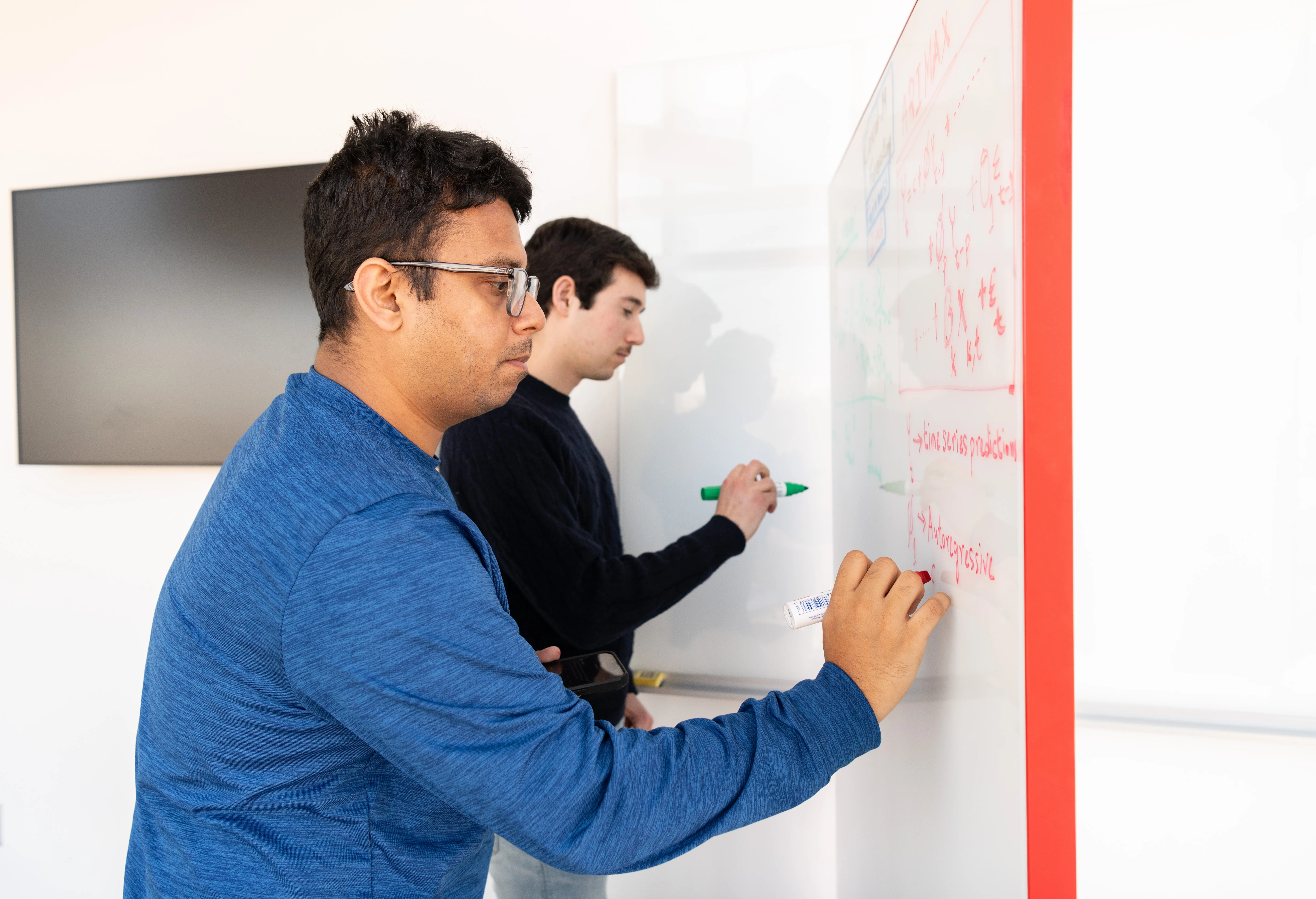
Graduate students are an important part of the University of Maryland Institute for Advanced Computer Studies (UMIACS). Students are initially admitted to the campus through one of the graduate programs to which our faculty belong, then join the institute when they join the labs of our faculty. Many of our centers offer the opportunity for graduate students to collaborate with faculty and other graduate students from diverse academic disciplines. Machine learning experts working with computational linguists, or data scientists working with biologists, are but a few examples. All of this graduate work is supported by cutting-edge computational resources and technical support that we believe are unequaled on the University of Maryland campus.
Graduate Students In the News

Redefining Human Interaction with Wearable Tech and AI
Yang Bai is developing wearable technologies and AI systems that can sense and respond to their environment in real time.

Redefining Digital Privacy by Outsmarting Wireless Tracking
Erik Rye is researching methods to prevent tracking through wireless access points, aiming to develop protocols that can safeguard personal data in both…

Optimizing Computational Dataflow with Machine Learning
Sanjali Yadav has developed a novel machine learning approach that enables adaptive and intelligent hardware, boosting dataflow efficiency and reducing energy…
Computing Themes
At the University of Maryland Institute for Advanced Computer Studies (UMIACS), we use an interdisciplinary approach and powerful computing resources to address grand challenges that can impact science and society.
Computing & Society
human-computer interaction, natural language processing, software engineering, data-driven modeling, spatial data structures, deep learning, smart transportation, and more
Computing & Security
blockchain & cryptocurrency, human-centered security, post-quantum cryptography, cloud security, autonomous systems, programming languages, and more
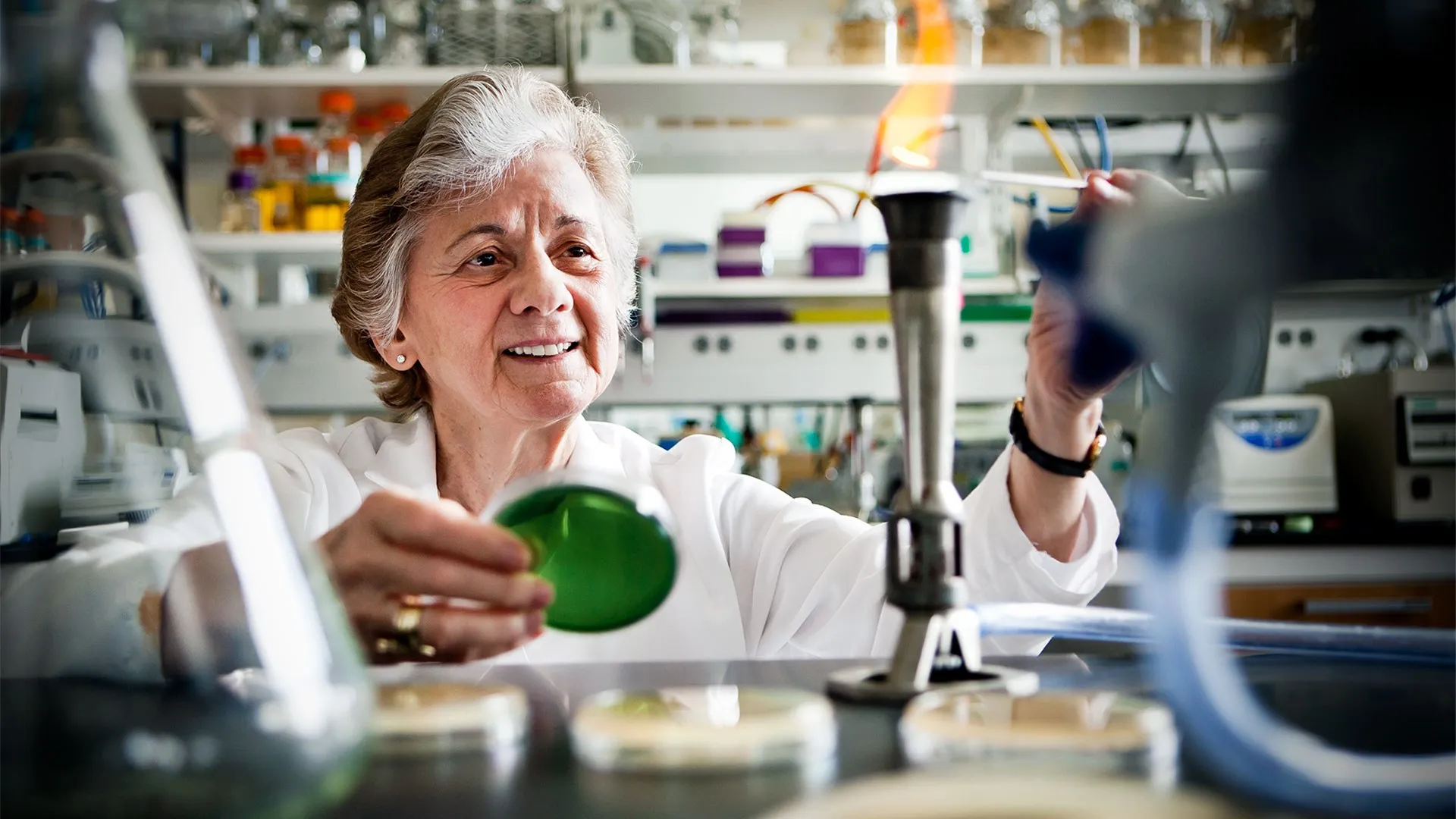
Computing & Health
computer visualization, immersive media for medical training, pathogen genomics, molecular evolution, combinatorial optimization, and more
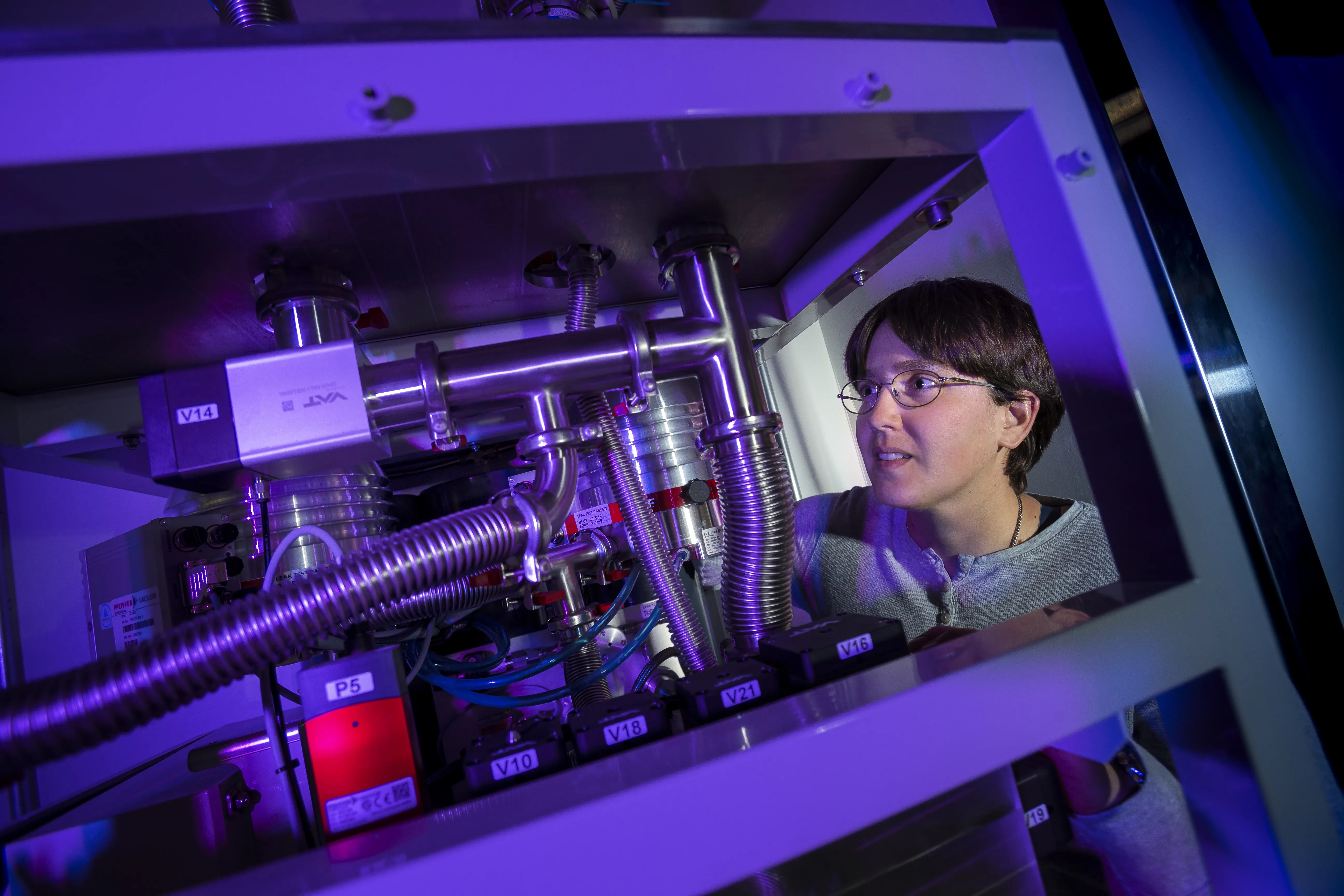
Emerging Technologies
quantum information science, trustworthy AI, microbiome research, autonomous robotics, computational cognitive science, neuromorphic engineering, and more
Director's Message to UMIACS December '24
My first job at the University of Maryland—it’s been more than 20 years now—was as an assistant research scientist in UMIACS. Like many when they first arrived here, I was quite impressed with the scope and efficiency of the institute’s operations.
UMIACS was expanding at that time—there was an ongoing surge of new federal funding for computational linguistics and computer vision applications for national security, with additional research dollars for computational biology and cybersecurity soon to follow.
What I discovered was that in addition to forward-looking leadership from the UMIACS director at that time (V.S. Subrahmanian, now at Northwestern University), there was another powerful force driving much of the day-to-day activities of UMIACS.
That force was Johanna Weinstein, who died earlier this month after having served for more than three decades as director of administration and operations for the institute, retiring from that role in late 2016.
“Jo” as she was known to us, had the uncanny ability to “make things happen.” Need new faculty lines and support staff to launch a major interdisciplinary center? Talk to Jo. Want to elevate the pre-and post-award management of research funding to a premiere level that is, in my opinion, second-to-none at our university? Jo would find and mentor staff to make that happen. Having an issue with office space for 12 new hires? Jo will figure it out.
We owe a lot to Jo’s expertise and commitment to advancing our institute. She could quickly cut through all the “academic speak” and provide workable solutions to most any operational challenge that UMIACS faced.
And many of us, including myself, looked to her for personal advice when needed.
She will be missed, but not forgotten, as we continue to move forward. Thank you, Jo, for all that you did on our behalf!
—Mihai Pop, UMIACS Director
Director's Message to UMIACS February '25
The first newsletter of 2025 is certainly looking toward the future, with a half-dozen stories highlighting research and scholarship by faculty, postdocs and students involved in quantum computing and quantum information science.
If you haven’t noticed, “quantum” is getting a lot of attention lately. Maryland Gov. Wes Moore visited our campus earlier this year to announce a bold initiative to turn the region into the “Capital of Quantum.” This includes an initial investment of $27.5 million in the governor’s FY 2026 proposed budget.
UMIACS has long held an important role in the university’s quantum enterprise. Two of the leading quantum efforts on our campus—the Joint Center for Quantum Information and Computer Science (QuICS) and the NSF Quantum Leap Challenge Institute for Robust Quantum Simulation (RQS)—fall under the umbrella of our institute, with UMIACS staff providing administrative and technical support as needed.
UMIACS also supports more than a dozen federal scientists (mostly from the National Institute for Standards and Technology) that are embedded full-time on the UMD campus, with the majority working in QuICS and RQS. We believe that this rich federal/academic partnership is essential for making significant progress as we work toward building quantum computing systems that can revolutionize advances in drug and chemical research, financial modeling, communication networks, and more.
Looking ahead, we hope to continue to expand our efforts in quantum—working closely with our federal partners, other researchers on our campus, and educators across the state interested in bringing quantum learning activities to their classrooms.
Collectively, we will make the state of Maryland the Capital of Quantum, setting the stage for new discoveries in quantum computing that, while at first may have seemed like science fiction, are now becoming a scientific reality.
—Mihai Pop, UMIACS director
Careers
Open positions at UMIACS can be found on the university's career page.
Director's Message to UMIACS March '25
Using technology to improve education outcomes isn’t a new idea. But there are emerging scientific discoveries and novel concepts—including several featured in this newsletter—which could certainly impact how we teach and learn in the future.
One example involves UMIACS faculty member Wei Ai, who is collaborating with education experts to bring the power of AI to bear on improving math learning outcomes. This innovative approach has drawn the attention of philanthropic organizations, which have stepped up and provided $4.5 million in funding. Our UMIACS tech staff is providing much of the computational support for this work.
In quantum, QuICS fellow Nicole Yunger Halpern is continuing her innovative approach to educating a broad audience about quantum mechanics—and other scientific matter—with a workshop that combines quantum steampunk (Nicole’s term for her work in quantum thermodynamics) with science fiction. Nicole is also working with a talented sculptor to bring a unique quantum steampunk sculpture to various public events during the next year, enlightening and inspiring others to learn more about this fascinating topic.
And check out this new video on the work being done by Jun Nishida and his students in the Embodied Dynamics Laboratory. Collectively, the lab is exploring connections between the digital world and human embodiment and cognition, which can ultimately contribute to the formation of physical skills, knowledge, subjectivity and behavior.
UMIACS is proud to support all these efforts—and more—as we continue to advance new discoveries and new knowledge that will have a positive impact on society.
—Mihai Pop, UMIACS director
Director's Message to UMIACS April '25
 New ideas in science and technology—that pretty much defines the existence of UMIACS.
Our newsletter this month showcases some of those ideas that have come to fruition: leading to novel ways to better inform the public about NASA satellite data, innovative training tools for the medical community, and new standards for post-quantum cryptography.
All these projects, and many others underway in our institute, start with a bold vision: How can we advance new knowledge and technology that will have a positive impact on science and society?
UMIACS is proud to support these ideas, offering superb technical support and administrative resources needed to make these projects flourish.
We also promote activities that encourage our UMIACS research community to interact with others. The recent microbiome meet-up, where participants from 10 higher education institutions, two research institutes, four federal institutions and one professional organization all met to explore topics related to innovation and translation in microbiome research, is but one example.
The common thread for all these endeavors is people. People that have ideas they discuss with colleagues and others and then act decisively to advance their research. I continue to be amazed at the level of ongoing research and scholarship in our institute.
Part of that level of excellence is due in no small part to people like Howard Elman, who steps down in late June from his full-time role at the University of Maryland after a 40-year career here, including two years as interim director of UMIACS.
During his time in UMIACS, Howard's bold ideas included expanding our computational infrastructure and actively recruiting faculty from other departments like linguistics, business, and electrical and computer engineering.
His vision of passionately promoting stronger ties between computer science and applied mathematics has greatly enhanced research and scholarship on the University of Maryland campus, and beyond. Thank you, Howard, for all that you have done!
—Mihai Pop, UMIACS director
content from previous Home page
Complex microbial communities (known as microbiomes) inhabit virtually every part of our planet—from ocean depths to mountaintops, across vegetation surfaces, within agricultural soil, and both on and within all living creatures.
The Center of Excellence in Microbiome Sciences joins faculty, postdoctoral scholars and graduate students from across the University of Maryland in pursuit of a deeper understanding of complex microbial communities, and how those microbiomes interact with each other and with our ecosystem.
Launched in February 2023 with startup funding from the University of Maryland Grand Challenges Grants Program, the center currently has faculty from the College of Agriculture & Natural Resources, the College of Computer, Mathematical, and Natural Sciences, and the A. James Clark School of Engineering. The center receives administrative and technical support from the University of Maryland Institute for Advanced Computer Studies.
One Health
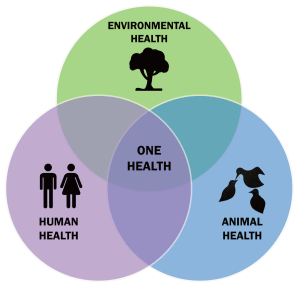
The center’s research and scholarship is driven by a “One Health” paradigm—officially adopted by the Word Health Organization in 2016—which advocates for an integrated, unifying approach to balance and optimize the health of people, animals, and the environment.
Under the One Health concept, these subcategories give specific examples of the role that microbes have in our lives, and in the sustainability and health of our planet.
Human Health
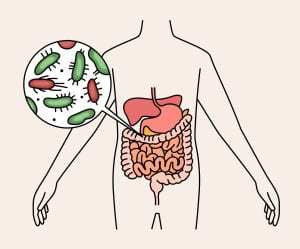
Disruptions in the human gut microbiome have been associated with intestinal disorders like diarrhea or inflammatory bowel disease, as well as mental health outcomes and the effectiveness of cancer immuno-therapies.
Microbiome-based interventions recently garnering FDA approval—such as fecal matter transplants—have been demonstrated to be an effective treatment for Clostridium difficile diarrhea (a recurring condition triggered by antibiotic use that primarily affects the elderly).
Animal Health
The microbiomes in the guts of cattle can help improve milk and meat production, as well as the health of animals, thereby reducing the need for antibiotic use and potentially preventing food-borne disease outbreaks.
Environmental Health
Many greenhouse gasses are produced in the guts of animals, agricultural soil, and wetlands. Yet microbes in soil and wetlands can, under the right conditions, degrade greenhouse gases, or detoxify harmful chemicals.
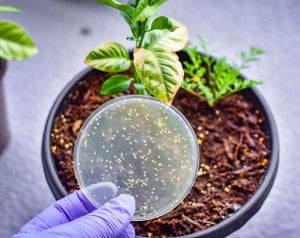 Microbial communities associated with the roots of agricultural crops nourish the plants, help protect them from pathogens, and can even mitigate some of the impacts of a changing climate, thus improving crop yield and resilience.