
While machine learning has transformed everything from health care to natural language processing, understanding the limits and capabilities of this AI-based technology requires careful theoretical study.
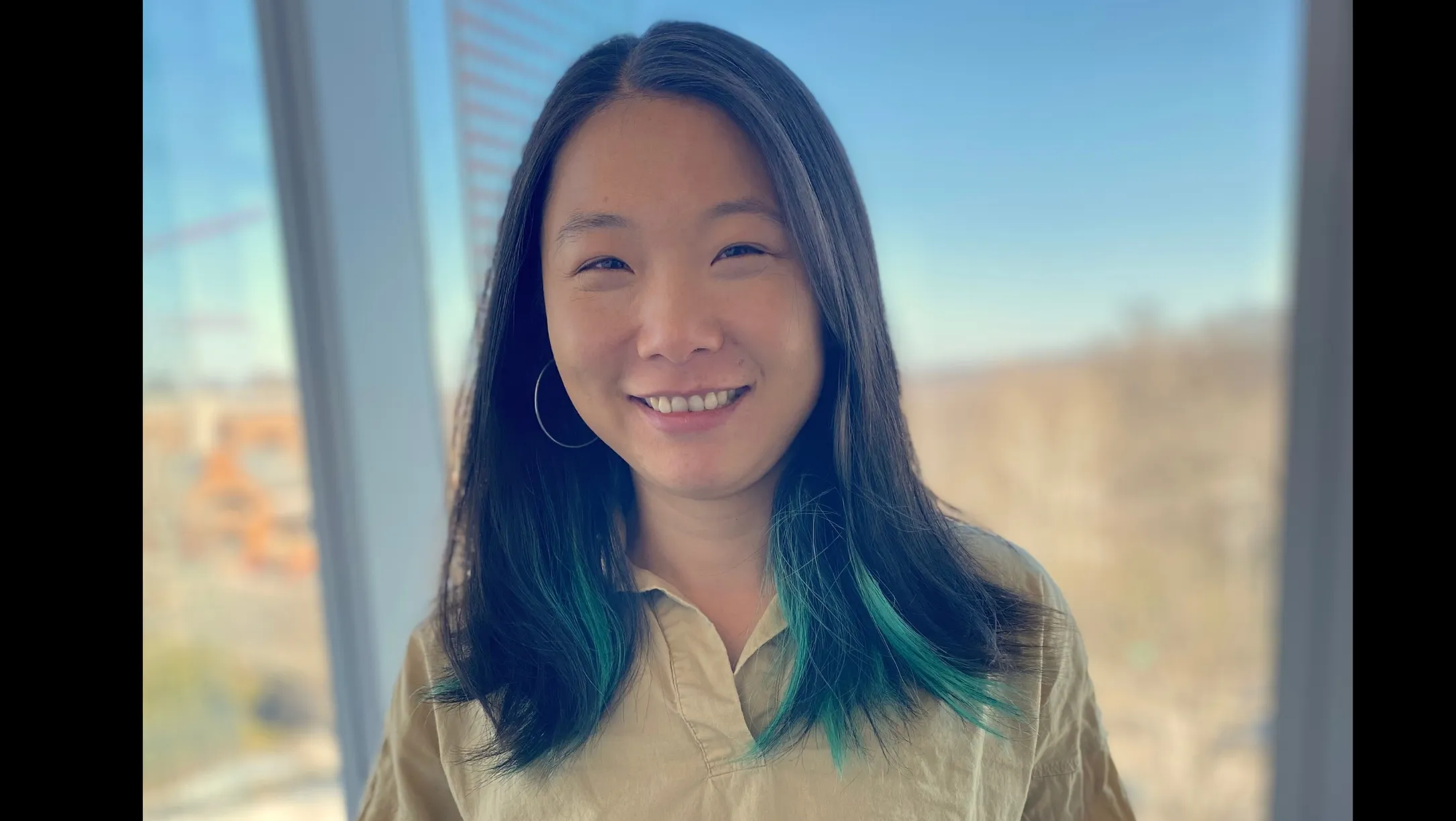
Han Shao, who joined the University of Maryland last fall as an assistant professor of computer science, is currently focused on bridging theory and application to understand what machine learning algorithms can—and cannot—do.
“I am trying to understand the limitations of algorithms and figure out how to build better ones,” says Shao, who holds an affiliate appointment in the University of Maryland Institute for Advanced Computer Studies (UMIACS).
Her research interests span machine learning theory, economics and computation, and algorithmic game theory, giving her a broad perspective on both theoretical and practical challenges in computing.
Some of Shao’s recent work, presented at the 39th Annual Conference on Neural Information Processing Systems, focuses on hallucination and model collapse in large language models—two persistent problems that can produce incorrect or unreliable outputs. Shao and her team found that when a model learns only from existing data, it can’t be perfect at both avoiding mistakes and making accurate predictions, shedding light on the limits and trade-offs of these systems.
Shao says her path to UMD was shaped by both research and mentorship. Two years ago, she participated in the UMD Center for Machine Learning’s Rising Stars program, a turning point that helped her decide to pursue an academic career.
“Before that workshop, I hadn’t decided whether to go on the job market,” she says. “Talking to faculty and other rising stars helped me realize I should apply that year.”
Originally from China, Shao earned her Ph.D. in computer science from the Toyota Technological Institute at Chicago in 2024 and recently completed a postdoctoral research fellowship at Harvard University. She was drawn to Maryland because of its strong AI research community.
“UMIACS has a great group of researchers whose interests align with mine,” she says.
At UMIACS, Shao looks forward to collaborating with Soheil Feizi and Furong Huang, both associate professors of computer science, and Tom Goldstein, Aravind Srinivasan and Mohammad Hajiaghayi, professors of computer science, while exploring other opportunities across the institute. She is also eager to mentor students in tackling challenging problems in machine learning theory.
“I want students to understand what’s achievable and what’s not, and to take ownership of projects from start to finish,” Shao says.
—Story by Melissa Brachfeld, UMIACS communications group