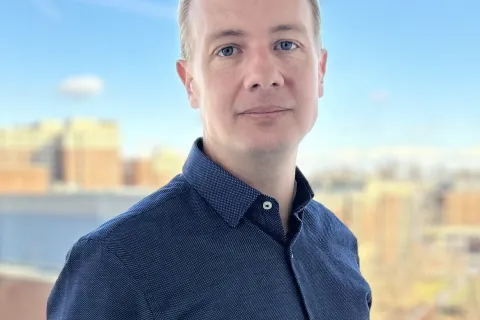
In a Q&A with Roadmap magazine, he relates on why we should stop worrying about autonomous AI systems and start thinking more about building systems that help people.
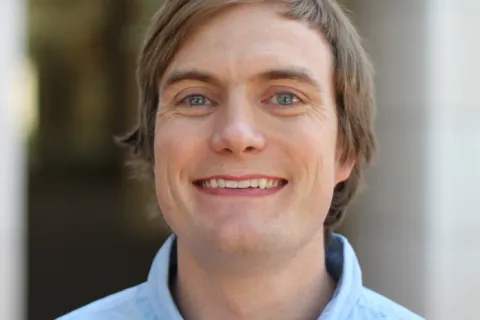
The award—expected to total about $650,000 over the next five years—supports his work in “descattering,” which involves developing novel ways for computers to “see through” objects and obstructions that scatter light.
Researchers from the Computational Linguistics and Information Processing Lab are looking into the problems that arise when language translation tools provide physicians with incorrect translations for discharge instructions or medication protocols.
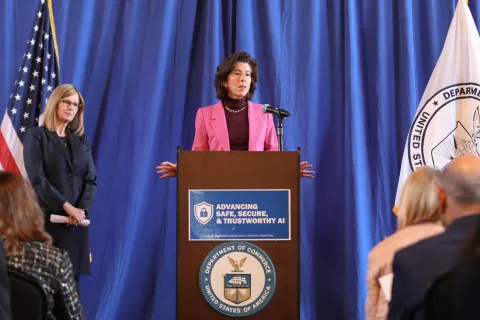
The award—expected to total $665,550 over the next five years—supports her work in advancing reliable and trustworthy artificial intelligence (AI) for social good.
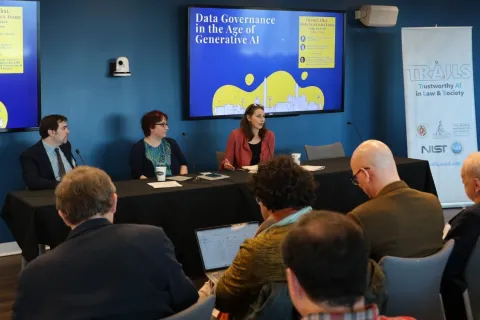
The Institute for Trustworthy AI in Law and Society recently partnered with the Digital Trade and Data Governance Hub to host a conference to identify gaps in data governance related to large language models and discuss ideas to address them.
Five papers by current QuICS members were accepted for talks and one will be featured in an invited plenary talk—a mark that continues a strong history of QuICS representation at the premier conference dedicated to quantum computer science.
QuICS Fellow Michael Gullans and Hartree Postdoctoral Fellow Dominik Hangleiter were part of a team that created a prototype quantum computer with a record number of qubits.