
From urban compost piles at local farms to watershed sampling along the Anacostia River, microbial communities shape daily life in ways that often go unseen — yet the tools and training behind microbiome science remain out of reach for many smaller institutions and local communities.
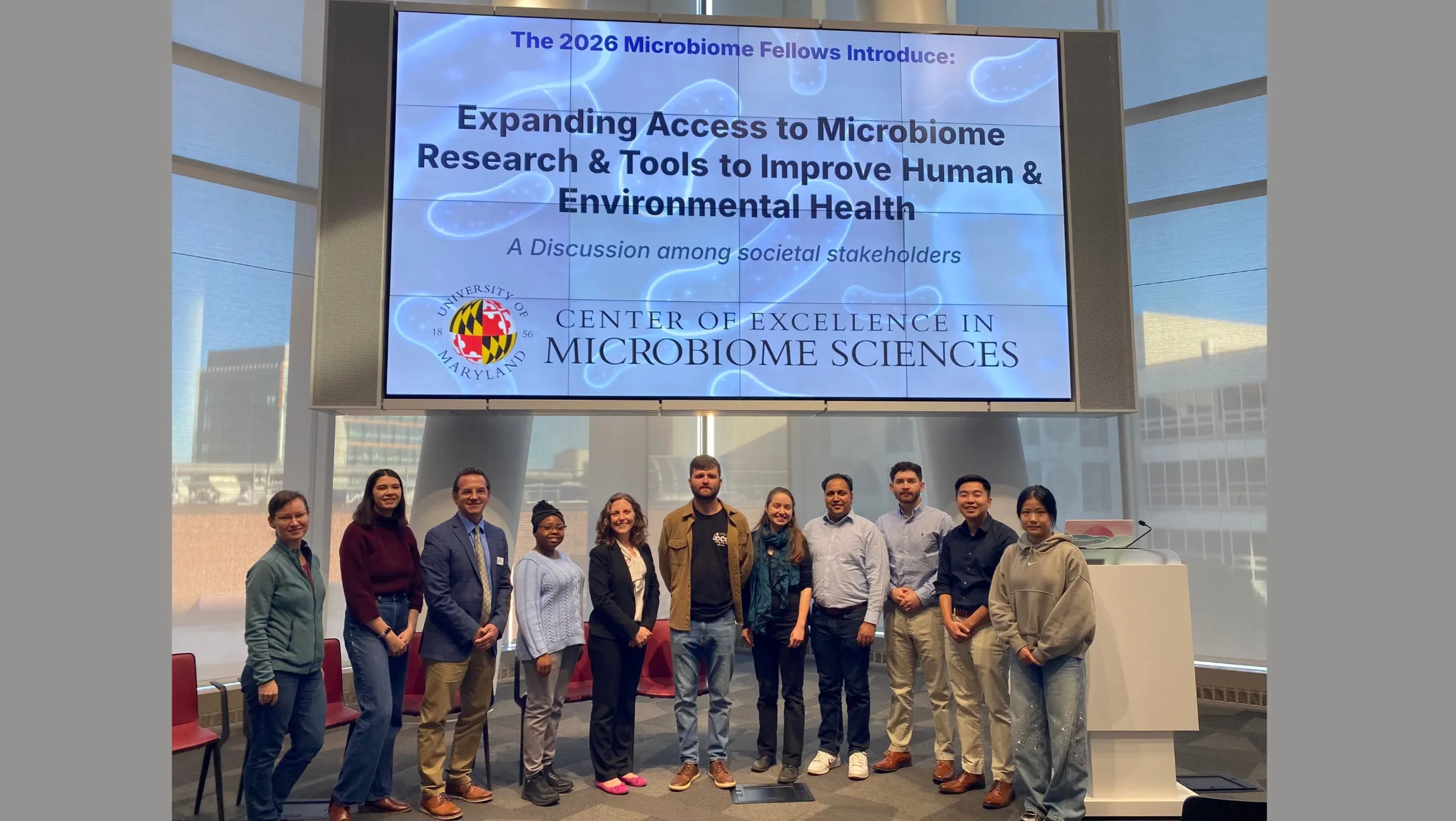
Students, researchers and educators recently gathered at the University of Maryland to tackle that divide during a capstone panel and roundtable discussion organized and hosted by the 2026 Fellows of the UMD Center of Excellence in Microbiome Sciences.
Supported by UMD’s Grand Challenges 1.0 Grants Program, the fellowship brings together an interdisciplinary cohort of eight graduate students across colleges and schools for training in collaborative research, science communication and ways to apply microbial discoveries to real-world problems. The Center is supported by the University of Maryland Institute for Advanced Computer Studies.
Tasked with designing a public-facing capstone project from scratch, the fellows curated a panel that connected academic research directly with community practitioners.
The panel featured Amy R. Sapkota, MPower Professor and chair of the Department of Global, Environmental, and Occupational Health; J. Adam Frederick, assistant director of education for Maryland Sea Grant at the Institute of Marine and Environmental Technology; and Thomas Fazio, compost manager at Prince George’s County-based urban farm ECO City Farms. Together, they highlighted how the study of microscopic communities of bacteria, fungi and viruses in human bodies, water, and soil, shapes everything from local farms to global waterways.
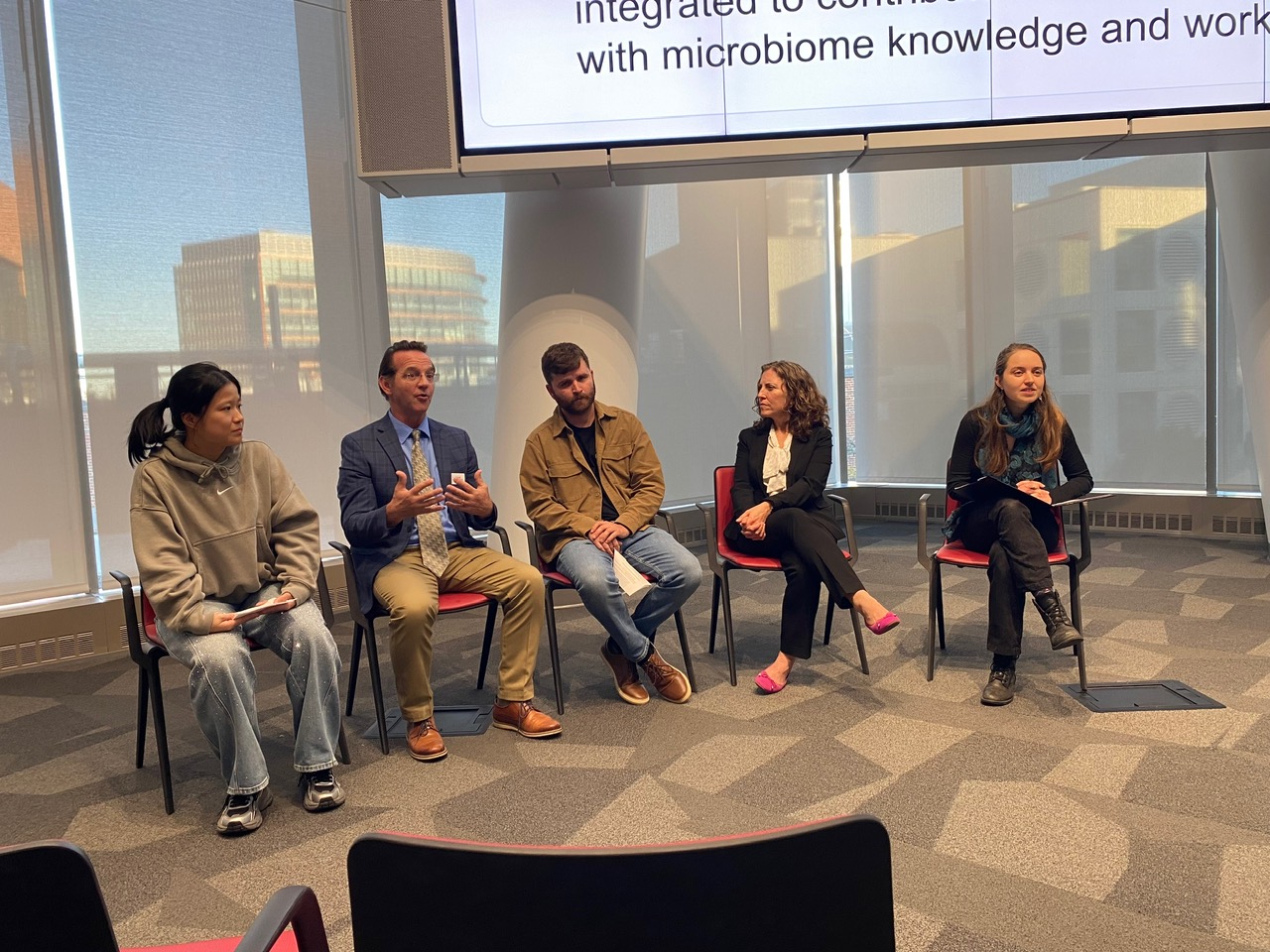
“We have a problem in academic science in terms of getting the message out about how impactful our research is and how positive it can be,” Sapkota said. “This hurdle of scientific literacy is something that we should be actively addressing through outreach.”
While DNA sequencing and analytical tools have become significantly cheaper over the past two decades, the panelists noted that major barriers persist. High equipment costs still limit smaller labs and local nonprofits. At the same time, hands-on learning struggles to get basic supplies — from international partners having difficulty sourcing metal for field-testing racks to K–12 schools lacking foundational tools like microscopes.
For Fazio, who turns food scraps into nutrient-rich soil using beneficial microbes, bridging the gap between university research and on-the-ground work means translating evidence into public awareness and smarter policy. He said that collaborating with researchers helped ECO City Farms see compost not just as a fertilizer alternative, but as a food safety tool that reduces pathogens in crops. Fazio hopes stronger ties between academia and regulators like the Maryland Department of Agriculture will lead to updating composting rules originally written for sewage rather than community food-scrap programs.
Frederick, who focuses on hands-on environmental education and workforce training, pointed to the power of direct engagement. Drawing on international projects connecting high schoolers in Charleston, South Carolina, with peers in Sweden, Germany and Spain, he noted that students thrive on real ecological fieldwork when given the tools.
“People are really engaged when you put good work in front of them, no matter what their age is,” Frederick said. “So it’s more about commitment and access than anything, because we already know what works.”
Sapkota, whose research examines how microbes in irrigation water and soil affect public health, emphasized expanding university outreach and citizen science. She pointed to her team’s partnership with the Anacostia Riverkeeper, where local volunteers sample dozens of watershed sites in a single day — a “two-way street” where researchers learn from residents’ local knowledge.
To sustain that momentum, she argued that universities should better reward public outreach in faculty promotions and expand the University of Maryland Extension model beyond agriculture into fields like public health.
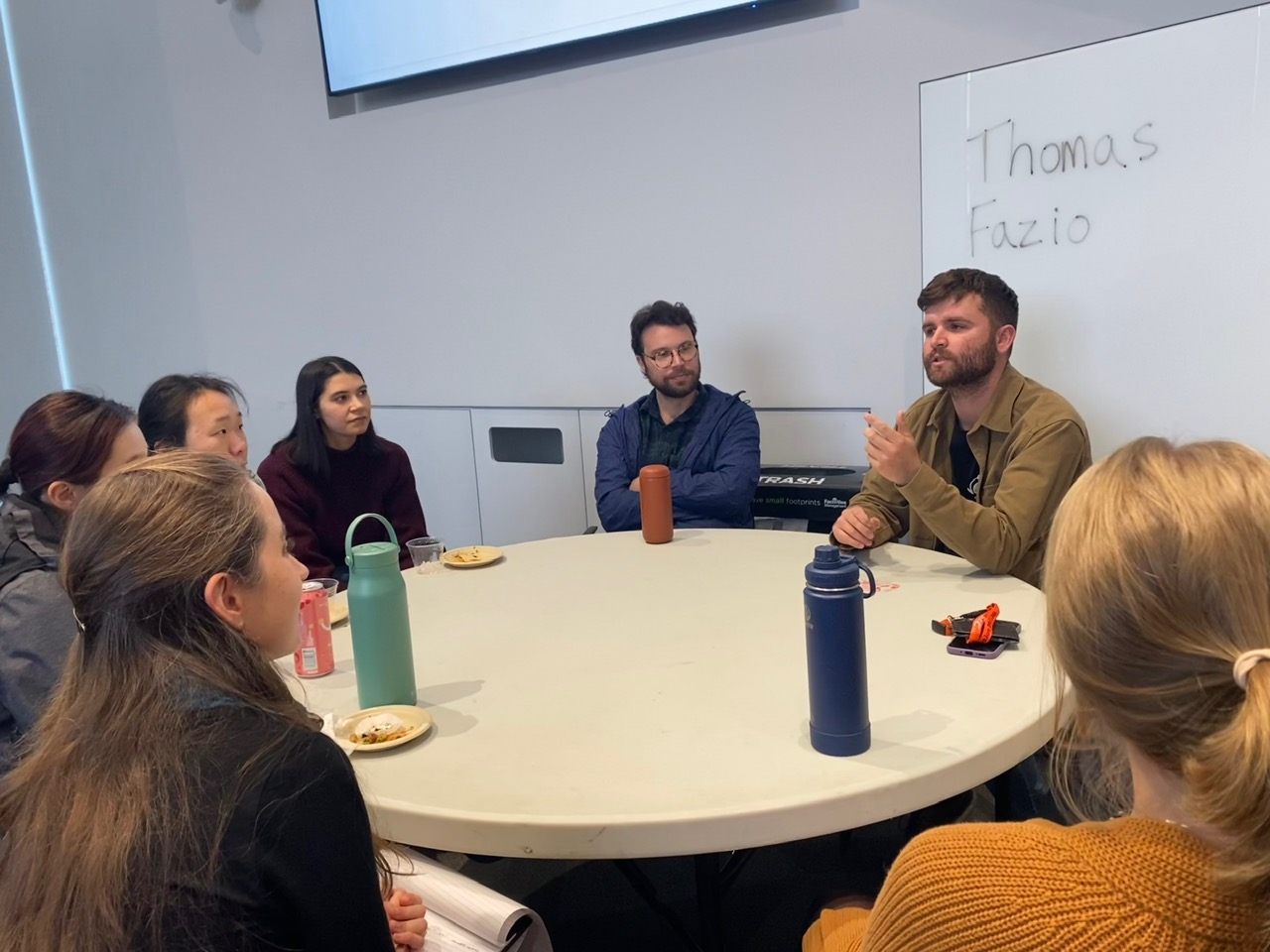
After the panel, attendees broke into small-group roundtables with each speaker to brainstorm potential collaborations and training opportunities — a format that was designed to show the breadth of the field by bringing together distinct disciplines, said Yongcheng (Suyue) Cao, a Center fellow and second-year Ph.D. student in civil and environmental engineering.
“We hope people got a chance to learn something new and forward-thinking, to establish relationships that they can continue in partnerships, and generate ideas from people they might not normally be talking to,” said Sylvia Jacobson, a Center fellow and third-year Ph.D. student in environmental science and technology.
Gabi Steinbach, an associate research scientist and program coordinator of the Center, said the event highlighted what students can achieve when given the space to lead.
“Seeing our fellows bring together voices from public health, science education and local agriculture shows the power of interdisciplinary collaboration,” she said. “We’re excited to see how these students take what they’ve learned and shape the future of microbiome science.”
—Story by Melissa Brachfeld, UMIACS communications group