
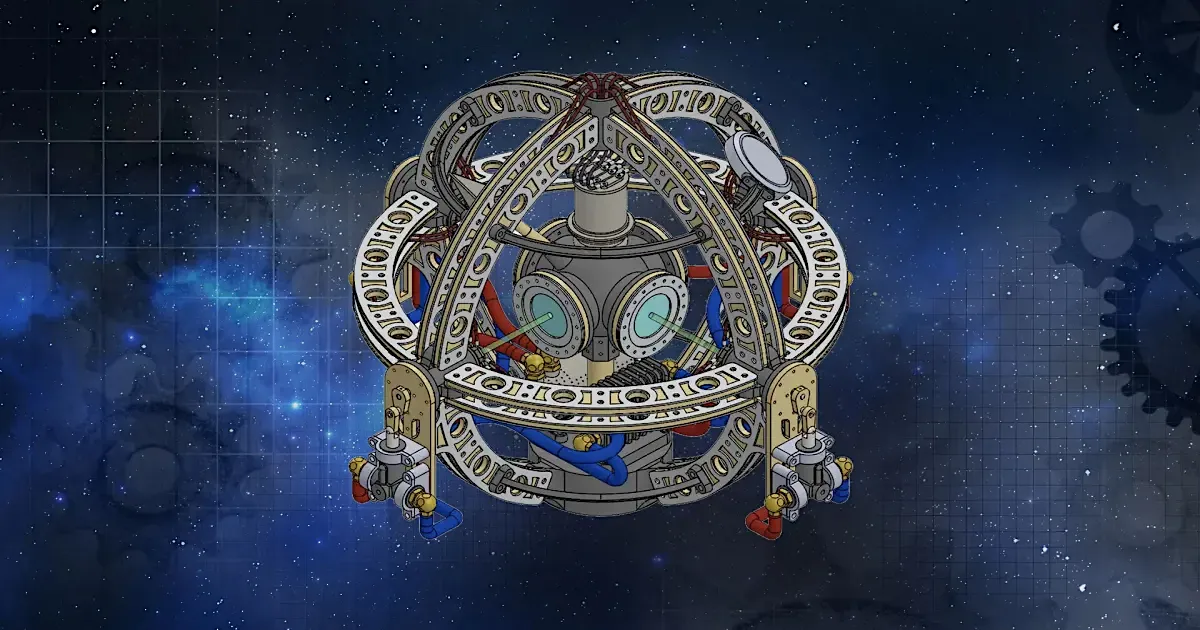
The Maryland Quantum-Thermodynamics Hub at the University of Maryland will co-host a research symposium next month with the University of Rochester’s Center for Coherence and Quantum Science, bringing together researchers to examine how quantum systems lose their “quantumness” and begin to behave classically when interacting with their environment.
The two-day event—set for June 3–4 at Rochester’s Morey Hall—will bring together leading researchers and early-career scientists to explore some of the field’s most fundamental questions, from how energy moves at microscopic scales to why time appears to flow in only one direction.
It will also include an opportunity for attendees to engage creatively with those ideas, says Nicole Yunger Halpern, a theoretical physicist at UMD and co-organizer of the event.
“Quantum thermodynamics is a rapidly growing field with relevance to many areas of physics—including quantum computation, which is threatened by decoherence,” says Yunger Halpern, referring to the fragility of quantum states when exposed to their environment. “We hope that symposium participants learn about the rich opportunities in quantum thermodynamics and join in the fun.”
The symposium will feature talks from researchers including Felipe Barra (University of Chile), Lea Ferreira dos Santos (University of Connecticut), Saikat Guha (University of Maryland), and Giulia Rubino (University of Bristol), alongside a keynote address that highlights the connection between science and storytelling.
That connection is central to the work of keynote speaker Mark Alpert, a novelist, former Scientific American editor and science journalist who has built a career translating complex physics concepts into high-stakes thrillers. He will present “Quantum Crash: Turning Science into Fiction and Vice Versa,” a talk exploring how academic research can be transformed into accessible storytelling.
Alpert traces part of that approach back to a visit to UMD nearly two decades ago. In 2008, while editing a Scientific American article on trapped ions, he toured physicist Christopher Monroe’s lab. (Editor’s note: Monroe is now primarily at Duke University.)
“I went down to Maryland, and it was really cool because it was so hands-on,” Alpert says. “There was a laser on a table firing this beam, and then there were just these little mirrors, and you'd tilt them so that you could direct the beam toward the trapped ion, which was laser cooled. I thought, ‘This is great. This is all on a tabletop.’”
Watching researchers work to isolate qubits—the basic building blocks of quantum information—from their environment prompted a question that later shaped his novel The Omega Theory (originally titled Quantum Crash): what might happen if the universe itself behaved like an information system pushed beyond its limits?
For Alpert, turning these ideas into thrillers is part of a broader effort to make science more accessible.
“A lot of people I think would be intimidated by science,” he says. “But if they're given a thriller—where there's explosions, gunfights, chases, and a little science thrown into it—they can digest it and learn something.”
That goal aligns with outreach efforts by the Maryland Quantum-Thermodynamics Hub, which engages the public through initiatives such as a “quantum-steampunk” creative writing course and a fiction contest.
“Quantum thermodynamics offers not only rich scientific opportunities, but also an aesthetic: it shares the spirit of steampunk, so some of us call it ‘quantum steampunk,’” says Yunger Halpern, who is a fellow in the Joint Center for Quantum Information and Computer Science (QuICS) and holds an appointment in the University of Maryland Institute for Advanced Computer Studies (UMIACS). “Mark is an ideal keynote speaker to strengthen this connection between science and art.”
For Alpert, the admiration is mutual. While he is interested in the intersection of physics and fiction, he also points to the group’s research as a source of inspiration.
“They're directing the research in ways that address philosophical questions that I am very, very interested in,” he says. “How does the quantum world transition into the classical world? How does the macroscopic picture emerge from the microscopic picture?”
Those questions will remain at the center of the symposium. In addition to keynote and speaker sessions, early-career researchers will present their work during poster sessions, with prizes sponsored by the Fidelity Center for Applied Technology and travel grants from Normal Computing.
—Story by Diya Sharma, UMIACS communications group