
Analysts expect the fast-growing quantum technology sector to create hundreds of thousands of jobs at all levels over the next decade. But to meet that demand, the United States must build a robust, geographically diverse talent pipeline equipped with the specific skills employers need—an effort that will require targeted resources and large-scale coordination, according to quantum educators and workforce development experts from nearly two dozen states.
A report released on March 18 by the Chicago Quantum Exchange (CQE) and two National Science Foundation Quantum Leap Challenge Institutes—the Institute for Robust Quantum Simulation (RQS) and Quantum Systems through Entangled Science and Engineering (Q-SEnSE)—highlighted several broad recommendations for strengthening the nation’s quantum workforce pipeline.
These include investments in two-year colleges and other non-R1 institutions, including support focused on equipment access, industry-aligned skills development, and clear guidance on how particular credentials will lead to jobs; the creation of a centralized, national repository of quantum education and workforce development resources that includes curricula, program models, partnerships, and implementation guidance; and incentives for cross-regional quantum workforce initiatives that promote knowledge sharing, coordination, and collaboration.
“The quantum workforce of the future will not be built by a single institution, region or discipline. It will require coordinated national effort, strong partnerships between academia and industry, and new pathways that allow students at all levels to enter the quantum ecosystem,” said Gretchen Campbell, associate vice president for quantum research and education at the University of Maryland. “This report makes clear that strategic investment now will determine whether the United States can meet the workforce demands of the emerging quantum economy.”
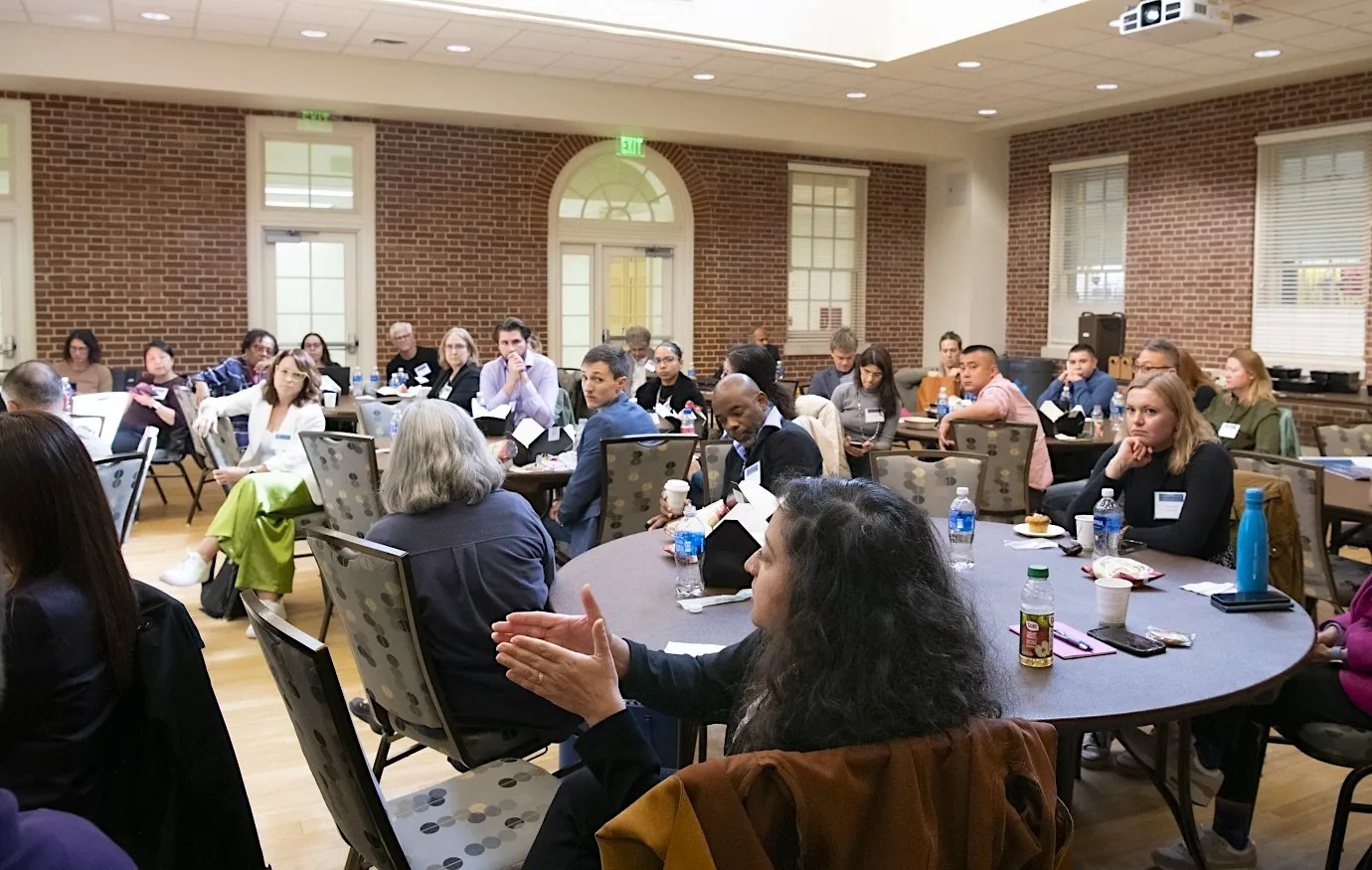
The report, Strategies for Tomorrow’s Quantum Workforce, grew from the Quantum Education and Policy Summit, hosted in October 2025 on the University of Maryland campus by RQS, Q-SEnSE and CQE with funding from the National Science Foundation and the Quantum Economic Development Consortium. Participants, who represented a wide range of educational institutions, companies, and other organizations, shared insights on key challenges in surveys before and after the event and during summit sessions.
Many attendees at the October conference were from undergraduate-focused institutions, including community colleges. Those networks will be key to strengthening the national quantum workforce strategy.
The summit brought together nearly 50 educators and professionals from 20 states, including 23 attendees from community colleges and teaching-focused institutions.
Participants spent time synthesizing needs/opportunities across different geographic areas and institution types. A series of breakout sessions then provided some frameworks for turning the identified needs/opportunities into more concrete recommendations.
In addition to breakout discussions organized around regions, institution types, and specific workforce initiatives, the summit included a panel on community and technical college efforts, a keynote presentation by Jobs for the Future, and resource presentations by quantum education field leaders Heather Lewandowski (University of Colorado Boulder) and Emily Edwards (Duke University).
The QEPS report is based on work supported by the National Science Foundation under award numbers 2016244 and 2534943.
—This news brief was adapted from an article published by the Chicago Quantum Exchange on March 18.